

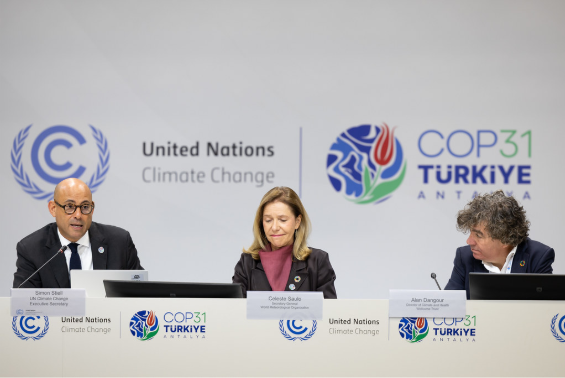
Global temperatures averaged about 1.47°C above pre-industrial levels from January to September 2026, WMO chief tells COP31 briefing.
Staff Reporter, Antalya, Türkiye | 9 November 2026
A powerful El Niño could help push global temperatures to another record in 2027, World Meteorological Organization Secretary-General Celeste Saulo warned in remarks prepared for a COP31 press conference in Antalya, Türkiye, on Monday.
Presenting the organisation’s State of the Climate Update 2026, Saulo said the global average temperature from January to September was about 1.47°C above the pre-industrial average. Strong El Niño conditions could lift the full-year figure further, she said.
The past 12 years have been the warmest on record, with the most recent four, including 2026, occupying the top four positions, according to her remarks.
Saulo said El Niño typically has its greatest effect on global temperatures in the year after it develops. She pointed to the record warmth of 2024 as a reason to prepare for another exceptionally hot year in 2027.
The organisation forecasts that the tropical Pacific sea-surface temperature anomaly could approach four times its 0.5°C El Niño declaration threshold between November 2026 and January 2027, she said. That comparison concerns a regional ocean-temperature anomaly, rather than the increase in global average temperature.
“We are super-charging our weather,” Saulo said.
Her remarks described dangerous heatwaves across India, Pakistan, other parts of Asia and North America, alongside devastating floods in parts of South America and Africa and drought in several other regions.
Saulo urged governments to sustain investment in climate observations and provide funding for action, saying early warnings depend on the quality of the measurements behind them.