

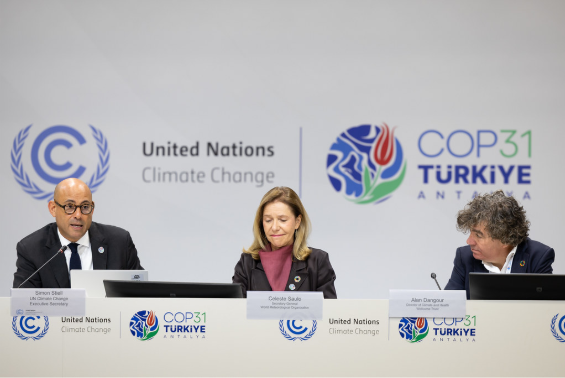
Wellcome highlights evidence linking higher temperatures with premature birth and gestational diabetes, alongside a call for better health guidance.
Staff Reporter, Antalya, Türkiye | 9 November 2026
Governments need stronger health guidance, planning and data to protect pregnant women and babies from extreme heat, Wellcome’s climate and health director Alan Dangour said in remarks for a COP31 press conference on Monday.
The briefing drew attention to maternal health risks as rising temperatures intensify pressure on communities and health services.
According to a summary circulated by the UNFCCC press team, materials from Wellcome and its partners report that each 1°C temperature rise is associated with a 5% increase in premature births and a 7% increase in gestational diabetes.
Those figures describe reported associations. They should not be read as percentage-point increases or as a prediction of an individual woman’s risk. The supplied summary does not identify the underlying studies, exposure periods or populations.
The press material also refers to a survey of 1,000 maternal health professionals across five continents. Detailed survey findings and methodology were not included in the text provided.
Dangour said Wellcome and its partners had launched a global call to action at the pre-COP31 meeting in Fiji, seeking the guidance, information, plans and data needed to protect pregnant women from extreme heat.
UN climate chief Simon Stiell also highlighted the issue, describing the effects of rising heat on pregnancy, newborns and maternal health as an unfolding health disaster linked to the climate crisis.
Dangour called for particular attention to groups vulnerable to climate impacts, including children, pregnant women, outdoor workers and older people.
His central appeal was for governments and businesses to make health outcomes a measure of climate action, alongside emissions and temperature goals.