

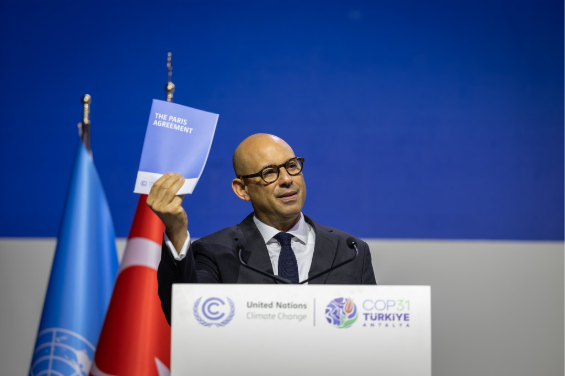
UN climate chief links extreme heat, pollution and damage to health systems as health takes centre stage at COP31.
Staff Reporter, Antalya, Türkiye | 9 November 2026
Climate change is driving a health emergency on a global scale, UN Climate Change Executive Secretary Simon Stiell said in remarks for a COP31 press briefing on Monday, warning that extreme heat, pollution and disasters are putting lives and health services at risk.
“The climate crisis is now a global health crisis of pandemic proportions,” Stiell said in the transcript supplied by the UNFCCC press team.
He described hundreds of millions of people exposed to extreme heat in southern Asia and cited an estimated 50,000 deaths during Europe’s northern summer heatwaves. The underlying mortality analysis was not included in the supplied material.
Stiell said rising temperatures were also threatening pregnancies, newborns and maternal health. He identified continued large-scale burning of coal, oil and gas, alongside forest destruction, as the underlying drivers of the crisis.
At the same briefing, Wellcome’s director of climate and health, Alan Dangour, said fossil-fuel-related air pollution and extreme heat associated with human-caused climate change were estimated to kill more than three million people annually. He cited the Lancet Countdown as a source of evidence on the health burden.
Dangour argued that climate negotiations should place people’s health at the centre of decision-making, with progress assessed through lives saved and improved health outcomes.
Both speakers highlighted cleaner energy and electrification as responses that could reduce pollution and pressure on health services. Dangour also pointed to heat early warning systems and adaptation measures as ways to prevent deaths.
Stiell said health would remain central to this year’s negotiations, building on work at COP30 in Belém.