
Senior Reporter, Antalya, Turkiye
Turkiye put electrification, cleaner industrial production and waste reduction at the centre of the COP31 Leaders’ Summit on Wednesday, seeking political support for measures to cut emissions across energy systems, factories and everyday consumption.
More than 100 national leaders joined UN Secretary-General António Guterres in Antalya on the summit’s opening day, according to the COP31 Presidency.
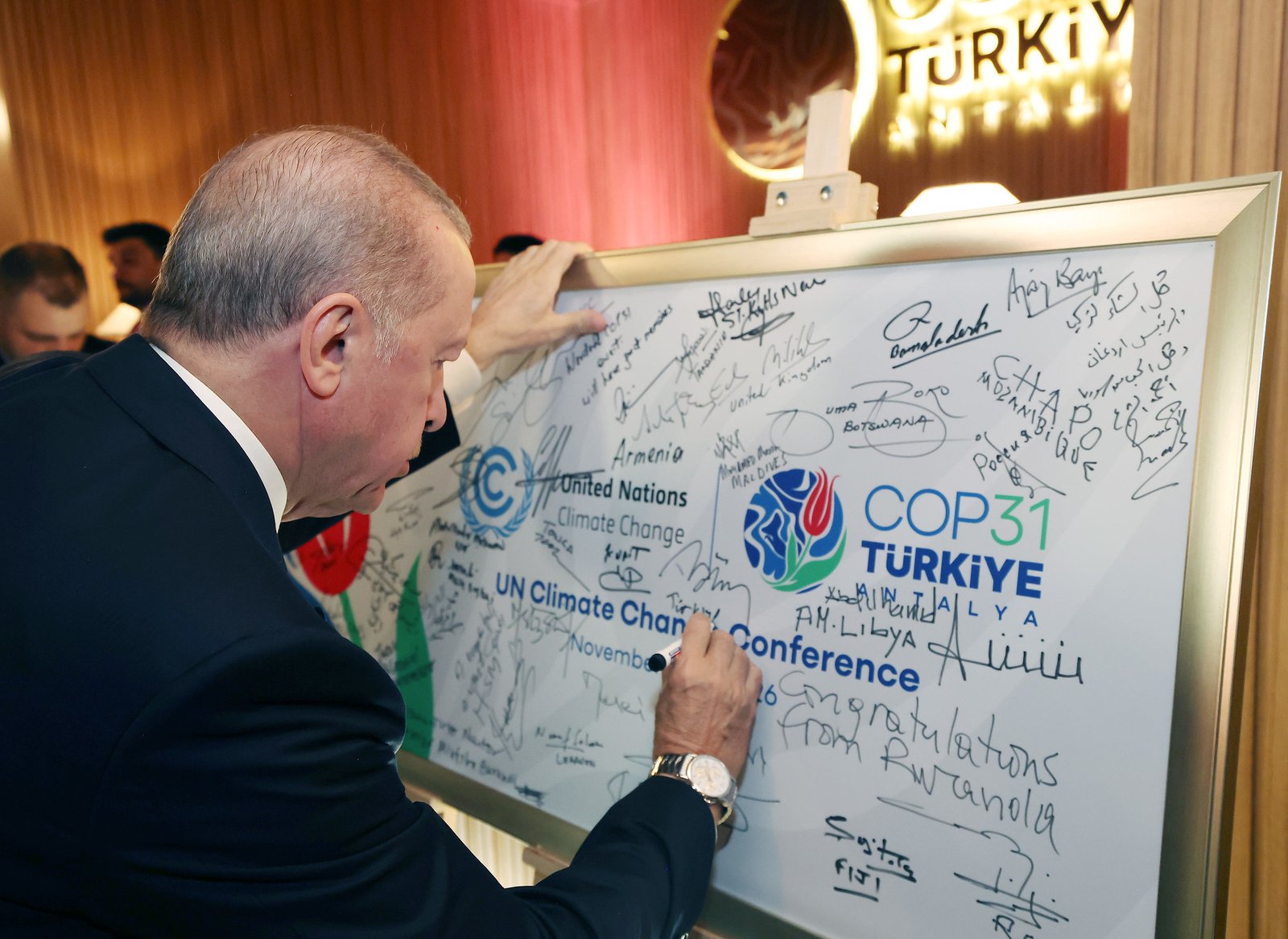
President Recep Tayyip Erdoğan urged governments to strengthen climate action while outlining Türkiye’s approach to transforming its economy through renewable energy investment, energy efficiency and cleaner transport.
He said environmental protection was rooted in the country’s cultural traditions and described decarbonisation as a priority spanning energy, industry, transport and agriculture.
Electrification moves up the agenda
Erdoğan hosted a high-level meeting on electrification, attended by Guterres, to examine opportunities for expanding electricity use and the obstacles slowing progress.
The discussions formed part of the presidency’s effort to make electrification a central COP31 priority. Türkiye also highlighted its National Energy Plan, published earlier this month.
COP31 President Murat Kurum linked climate policies to national economic interests, arguing that greater efficiency could strengthen energy security while clean technologies could support industrial development and employment.
He also highlighted the connections between investment in water and food security, and between resilient cities and stronger economies.
The presidency sought backing for the Antalya Green Industrialization Compact at a separate leaders’ event. The initiative aims to attract investment and expand markets for industrial goods produced with near-zero or low emissions.
Electrifying industrial processes and increasing the use of circular materials are among the approaches promoted under the compact.
The emphasis brings industrial production into the wider electrification debate, alongside the presidency’s push to reduce waste and improve resource use.
Waste targets seek political backing
At a leaders’ event on Zero Waste, Türkiye’s First Lady Emine Erdoğan addressed efforts to curb the growth of municipal waste and increase the reuse of materials.
The event sought support for reducing projected growth in global municipal solid waste generation by at least 50 per cent by 2035 and raising the global circular material use rate to at least 15 per cent.
The waste objective concerns the projected increase in waste generation; it does not mean halving the existing volume of waste.
Food waste is another focus. Launched on COP31’s opening day by the High-Level Champion, the #OneBillion Challenge aims to bring households, businesses, cities and community organisations into a shared effort to reduce discarded food.
Supported by the Zero Waste Foundation, the campaign is intended to showcase practical solutions and encourage participants to share results and lessons.
Cooperation on methane and circularity
The presidency also convened a high-level dialogue on methane emissions from waste, focusing on policies and projects that could reduce releases of the greenhouse gas.
A newly launched Circularity Knowledge Sharing Network will seek to connect circular economy approaches with climate policy and help successful initiatives expand.
At both events, the presidency issued voluntary calls for participants to reaffirm their commitments and take practical action.
The initiatives signal the host’s effort to connect climate diplomacy with changes in production and consumption. The announcements centre on building support and voluntary cooperation; the presidency’s account did not set out new funding commitments or binding implementation requirements.